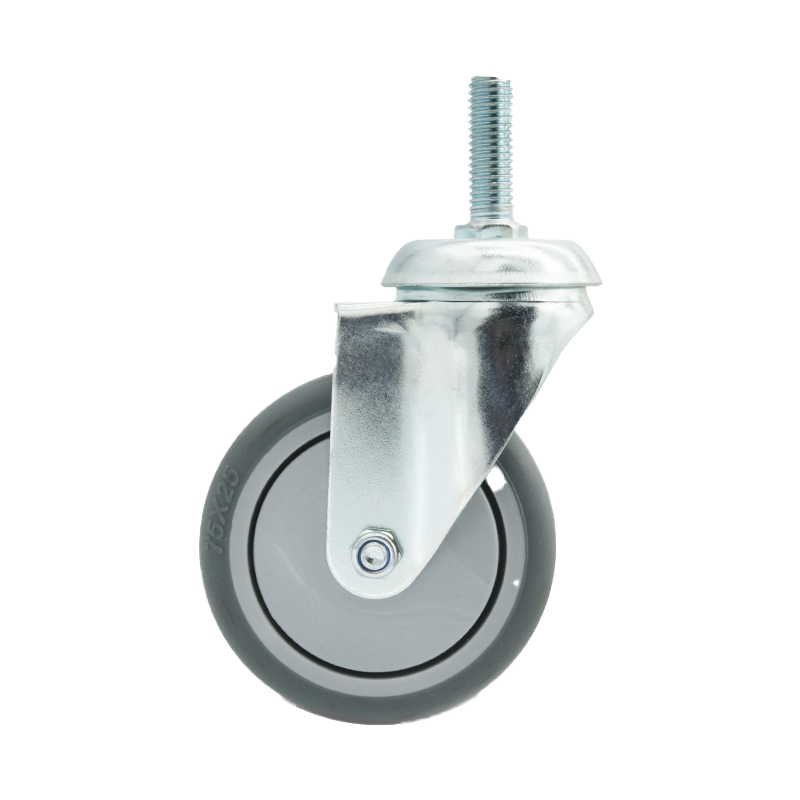
Introduction
Did you know the material of your caster wheels affects performance? The wrong choice may cause wear or floor damage.
In this guide, we’ll explore caster wheel materials like rubber, polyurethane, nylon, and steel. You'll learn the pros and cons of each material.
By the end, you'll know how to choose the best caster material for your needs. At KOSTER, we offer high-quality casters designed for durability. Learn more about our products.
The Role of Material in Caster Performance
How Material Affects Durability and Longevity
The material of a caster wheel directly impacts its durability. Harder materials tend to last longer, especially in industrial settings where the wheels are exposed to wear and tear. For example, steel casters are renowned for their strength, while polyurethane wheels combine toughness with floor protection. Choosing a material that matches the demands of your application ensures that the casters perform well over time.
Load Capacity and Material Strength
Different materials offer varying levels of load capacity. Steel and polyurethane, for instance, are great for heavy-duty applications and can support substantial weights. On the other hand, rubber wheels are better suited for lighter loads. Matching the right material with your load requirements ensures the casters will hold up under pressure without compromising performance.
Floor Interaction: Protection vs. Damage
Floor type plays a critical role in caster wheel selection. Some materials, like rubber and polyurethane, offer excellent floor protection, making them ideal for environments with sensitive floors, such as hardwood or tile. However, harder materials like steel and nylon can cause scratches and other damage to floors. If floor protection is a priority, softer materials should be considered, while harder materials are better suited for rough, industrial environments.

Types of Caster Wheel Materials
Rubber Casters: Versatile and Floor-Friendly
Rubber casters are widely used due to their affordability, versatility, and floor protection qualities. These casters are ideal for use in environments where floor preservation is a priority.
Advantages:
● Floor protection: Rubber casters are gentle on floors, minimizing the risk of scratches or damage to delicate surfaces.
● Quiet operation: The natural elasticity of rubber absorbs shocks, reducing noise and making them suitable for environments where noise reduction is important.
Disadvantages:
● Limited load capacity: Rubber casters tend to have a lower weight-bearing capacity compared to other materials like polyurethane or steel.
● Susceptibility to wear: Rubber is a soft material and may wear out more quickly, especially on rough surfaces or under heavy loads.
Polyurethane Casters: Durability and Performance
Polyurethane casters are highly popular for their combination of durability and floor protection. These wheels offer better load-bearing capacity and wear resistance than rubber casters.
Advantages:
● High durability: Polyurethane is resistant to abrasion, oil, and chemicals, making it suitable for commercial and industrial environments.
● Non-marking: Polyurethane casters do not leave marks on floors, preserving the appearance of sensitive surfaces like tile or wood.
Disadvantages:
● Higher cost: Polyurethane casters are more expensive than rubber, but the investment is often justified by their durability and performance.
● Potential for flat-spotting: Although less prone than rubber, polyurethane can still develop flat spots if left stationary under heavy loads for extended periods.
Nylon Casters: Strong and Resistant to Chemicals
Nylon casters are known for their strength, low rolling resistance, and resistance to chemicals, making them ideal for harsh industrial environments.
Advantages:
● High load-bearing capacity: Nylon is a durable material that can support heavy loads, making it ideal for industrial applications.
● Chemical resistance: Nylon is resistant to oils, solvents, and other chemicals, making it well-suited for chemical processing or laboratories.
Disadvantages:
● Hard material: Nylon can damage floors, especially delicate surfaces like hardwood or tile, due to its rigidity.
● Noisy operation: Because of its hardness, nylon wheels can create more noise compared to softer materials like rubber or polyurethane.
Steel Casters: High Capacity and Heat Resistance
Steel casters are commonly used for heavy-duty applications where strength, high load-bearing capacity, and heat resistance are required.
Advantages:
● Strength and durability: Steel casters can carry heavy loads without deformation, making them perfect for industrial machinery or heavy-duty carts.
● Heat resistance: Steel casters perform well in high-temperature environments, making them ideal for industries such as foundries or bakeries.
Disadvantages:
● Heavy and noisy: Steel casters tend to be heavier and noisier than their rubber or polyurethane counterparts.
● Potential floor damage: Steel casters can cause significant damage to sensitive floors, particularly hardwood or tile, unless used with floor protection mats.
Specialty Casters: Cast Iron, PVC, and More
In addition to the commonly used materials, several specialty casters are designed for specific applications. These include cast iron, PVC, and pneumatic wheels.
V-Grooved Cast Iron Wheels:
● Advantages: Precise alignment and reduced rolling resistance; suitable for industrial tracks.
● Disadvantages: Not suitable for sensitive flooring; limited to track-guided applications.
PVC Casters:
● Advantages: Cost-effective with decent durability.
● Disadvantages: Poor performance in noisy environments; limited load capacity for heavy-duty use.
Pneumatic Wheels:
● Advantages: Cushioned ride, ideal for uneven surfaces.
● Disadvantages: Require regular air pressure maintenance; lower load capacity compared to solid wheels.
Material | Advantages | Disadvantages | Best Use |
Rubber | Floor protection, quiet operation, shock absorption | Lower load capacity, wears out faster | Office furniture, light-duty carts, medical equipment |
Polyurethane | Durable, abrasion and chemical resistant, non-marking | Higher cost, potential for flat-spotting | Heavy-duty carts, industrial machinery |
Nylon | High load capacity, chemical resistance, low rolling resistance | Hard, can damage floors, noisy | Industrial environments, heavy equipment |
Steel | High capacity, heat resistant, long-lasting | Heavy, noisy, can damage floors | Heavy-duty machinery, high-temperature environments |
Choosing the Right Caster Wheel Material for Your Needs
Evaluating Load Requirements
One of the first steps in selecting the right caster wheel material is evaluating the load requirements. Choose a material that can support the weight of your equipment and any additional load it may carry. Overloading casters can lead to premature wear or failure, compromising safety and performance. For heavy-duty applications, materials like polyurethane, nylon, and steel are ideal due to their high load-bearing capacities.

Understanding Floor Type and Protection Needs
Consider the type of flooring in your environment when choosing caster material. If you’re working with sensitive floors, like hardwood or polished concrete, softer materials like rubber and polyurethane will be less likely to cause damage. On rougher floors, harder materials like steel and nylon are more suitable, as they can handle the wear and tear from uneven surfaces.
Floor Type | Ideal Caster Material | Reasons |
Smooth Surfaces | Rubber, Polyurethane | Floor protection, smooth movement, low resistance |
Rough Surfaces | Nylon, Steel | Durability, resistance to abrasion, ability to handle rough surfaces |
Sensitive Floors | Rubber, Polyurethane | Prevents floor damage, non-marking, low impact |
Balancing Noise Reduction and Material Strength
In environments where noise reduction is important, such as hospitals or offices, softer materials like rubber and polyurethane are ideal due to their quiet operation. However, if noise is less of a concern and load capacity is more important, steel and nylon casters might be the better option.
Considering Environmental Factors: Temperature and Chemical Resistance
In industrial environments where casters are exposed to chemicals, high temperatures, or moisture, selecting materials like polyurethane, nylon, or steel is essential. These materials offer excellent resistance to chemicals and high temperatures, making them ideal for harsh environments where other materials might degrade.
Load Capacity | Caster Wheel Size (Diameter) | Recommended Material |
Light (up to 100 lbs) | 2 - 3 inches | Rubber, Polyurethane |
Medium (100 - 300 lbs) | 4 - 6 inches | Polyurethane, Nylon |
Heavy (300+ lbs) | 6 - 8 inches | Polyurethane, Steel |
Practical Applications of Different Caster Materials
Best Casters for Industrial and Heavy-Duty Applications
For industrial environments or heavy-duty machinery, casters made from polyurethane, nylon, or steel are recommended. These materials offer the durability and load-bearing capacity needed for demanding tasks.
Casters for Office and Residential Use
For office furniture, home furnishings, and small carts, rubber and polyurethane casters are ideal. They provide smooth, quiet movement on flat surfaces while offering protection for sensitive floors.
Specialized Casters for Specific Environments
In specialized environments such as medical facilities, food processing, or high-heat applications, stainless steel or phenolic casters are often used. These materials offer corrosion resistance, high-temperature durability, and easy cleaning properties, making them suitable for strict hygiene standards.
Conclusion
Choosing the right caster wheel material is crucial for performance, safety, and longevity. Whether outfitting machinery or office furniture, selecting the appropriate material ensures functionality and floor protection. By considering factors like load capacity and environmental conditions, you can make an informed choice.
Each material—rubber, polyurethane, nylon, and steel—offers unique benefits. The right caster choice enhances mobility and improves operational efficiency. At KOSTER, we offer high-quality casters designed for durability and performance across various applications.
FAQ
Q: What are the best caster wheel materials for heavy-duty use?
A: Polyurethane and steel are ideal for heavy-duty applications due to their durability and load-bearing capacity.
Q: How does the material of a caster wheel affect its performance?
A: The material determines durability, load capacity, noise levels, and how well it interacts with floors. Rubber and polyurethane are quieter, while steel is better for heavy loads.
Q: Why should I choose polyurethane caster wheels?
A: Polyurethane casters offer excellent abrasion resistance, floor protection, and are well-suited for industrial applications requiring durability.
Q: Can caster wheel material damage floors?
A: Yes, harder materials like steel or nylon can damage delicate floors, while rubber and polyurethane protect floors from scratches and marks.