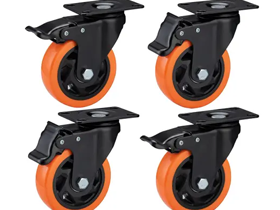
Caster wheels are vital components used across various industries to provide mobility for equipment, furniture, carts, and machinery. To ensure their effectiveness, caster wheels must be rigorously tested for durability and performance. These tests assess how well the wheels can handle weight, wear, and environmental conditions.
Key factors like load capacity, wear resistance, and the ability to withstand temperature extremes and impacts play a crucial role in the performance of caster wheels. Manufacturers conduct these tests to guarantee efficient function, minimize downtime, and reduce maintenance costs. This article explores the testing methods used to evaluate caster wheel durability and performance, helping you choose the right wheels for specific applications, from industrial settings to healthcare and retail environments.
Types of Tests for Caster Wheels
1. Load Capacity Test
Explanation: The load capacity test evaluates the maximum weight a caster wheel can support before it starts to fail or deform. This is crucial to ensure the wheel can handle the weight it is designed for without compromising performance.
Process: In this test, weight is gradually applied to the caster wheel until it reaches the point of deformation or failure. The objective is to identify the load threshold the wheel can bear without impacting its functionality or safety.
Importance: This test ensures that the caster wheel is appropriate for the intended application, particularly in environments where heavy loads are frequently moved. It guarantees that the wheel will maintain its durability and performance even under stress.
2. Wear and Tear Test
Explanation: The wear and tear test assesses how well a caster wheel performs over time with continuous use. It is designed to simulate long-term operation and determine how the wheel maintains its functionality under repeated stress.
Process: The wheel is subjected to repeated rolling over rough surfaces that mimic extended use, allowing the tester to observe how well the wheel endures over time.
Importance: This test helps determine the longevity of the caster wheel, ensuring that it will maintain smooth performance and avoid premature wear. It is particularly important in environments where the wheel will be in constant motion, such as warehouses or factory floors.
3. Rolling Resistance Test
Explanation: Rolling resistance refers to the force required to move the caster wheel across different surfaces. This test measures how easily the wheel moves and how much effort is needed to push or pull it.
Process: The caster wheel is pushed or pulled across various surfaces, and the resistance is measured under controlled conditions. Factors like surface type, wheel material, and diameter influence the results of this test.
Importance: The rolling resistance test is essential for determining the efficiency of the caster wheel, particularly in applications that involve frequent movement. Lower rolling resistance improves ease of movement and reduces the overall effort needed to maneuver heavy equipment.
4. Impact Resistance Test
Explanation: The impact resistance test evaluates how well a caster wheel can withstand sudden impacts without breaking, deforming, or malfunctioning. This is crucial for environments where the wheel may encounter shocks or drops.
Process: A weight is dropped onto the wheel, or the wheel is subjected to sudden shocks to simulate rough handling conditions. This tests the resilience of the wheel to unexpected impacts or vibrations.
Importance: This test ensures the durability of the caster wheel in high-impact environments, such as construction sites or areas where equipment is frequently dropped or jostled. Ensuring that the wheel can withstand such impacts helps to prevent damage or failure during use.
5. Temperature Resistance Test
Explanation: The temperature resistance test evaluates how well the caster wheel performs under extreme temperature conditions. It tests the wheel's ability to maintain its functionality and material properties when exposed to high or low temperatures.
Process: The wheel is exposed to both high and low temperatures to assess whether it becomes brittle, deformed, or damaged. This test ensures the caster can withstand temperature fluctuations without losing performance.
Importance: This test is particularly important for caster wheels used in outdoor or extreme conditions, such as in industrial environments or transportation applications where temperature extremes are common. It ensures that the wheel remains functional and durable despite fluctuating temperatures.
6. Corrosion and Weather Resistance Test
Explanation: This test determines how well the caster wheel can resist environmental factors like moisture, salt, and exposure to outdoor conditions. It assesses the wheel's ability to withstand rust and degradation over time.
Process: The wheel is exposed to corrosive elements like salt or placed in high-humidity environments to simulate outdoor or harsh weather conditions. The test monitors any signs of corrosion or material degradation.
Importance: Critical for applications in outdoor environments or industrial settings where exposure to moisture, salt, or extreme weather is common. This test ensures that the caster wheel can maintain performance despite challenging environmental factors. It is particularly crucial for marine applications or exterior equipment used in all-weather conditions.
By conducting these various tests, manufacturers can ensure that caster wheels meet the required durability and performance standards for different applications. Whether for industrial machinery, hospital equipment, or outdoor carts, the reliability of caster wheels is key to maintaining smooth operations and ensuring safety in various environments.

Factors Affecting Durability and Performance of Caster Wheels
1.Material Composition
The material used in a caster wheel significantly impacts its durability and performance. Different materials are selected based on the environment and specific needs of the application. For example, rubber wheels provide smooth movement and are gentle on floors, making them suitable for indoor applications. Polyurethane wheels are highly durable, resistant to abrasion, and perform well on both hard and soft surfaces, making them ideal for industrial use. Steel wheels, on the other hand, are used in high-load applications due to their strength but may not be as gentle on delicate floors. The choice of material determines the wheel’s resistance to wear, shock absorption, and ability to withstand heavy loads.
2.Wheel Design
Wheel design also plays a critical role in a caster wheel’s longevity and functionality. Factors like diameter, tread pattern, and swivel capability impact both performance and wear resistance. Larger diameter wheels generally roll easier and handle uneven surfaces better, leading to lower rolling resistance and better durability over time. Tread patterns that are designed for specific environments, such as smooth treads for hard floors or ribbed patterns for outdoor use, can enhance traction and reduce wear. The swivel capability is also important for maneuverability. Swivel casters allow for 360-degree rotation, offering flexibility in tight spaces, while rigid casters provide stability for straight-line movement. The design of the wheel ensures that it can perform efficiently across various applications.
3.Environmental Factors
Environmental factors, including temperature, moisture, and the type of surface, significantly affect a caster wheel’s performance and longevity. Exposure to extreme temperatures can cause materials like rubber to harden or soften, reducing the wheel's effectiveness and lifespan. Moisture, especially in outdoor or wet environments, can lead to corrosion and rust, particularly in metal wheels. Surface types also play a role; soft wheels are better suited for hard, smooth floors, while harder wheels excel in rough terrain but may wear more quickly on delicate surfaces. The wheel’s material and design must be chosen to match the conditions it will encounter to maximize durability and performance.
4.Manufacturing Quality
The quality of the manufacturing process also directly influences the reliability and consistency of caster wheels. High-quality manufacturing ensures that the wheels are made to precise specifications, with attention to material consistency, strength, and design accuracy. Poor manufacturing can lead to defects such as imbalanced wheels, weak spots, or inconsistent tread patterns, which can cause uneven wear, reduced performance, and a shorter lifespan. Ensuring that caster wheels are produced by reputable manufacturers with strict quality control processes is essential for guaranteeing long-lasting durability and consistent performance.
FAQ Section
1.What is the maximum weight a caster wheel can handle before failure?
The load capacity test measures the maximum weight a caster can handle before failure. When selecting a caster, choose one with a load capacity higher than the weight of the objects being moved to ensure safe, reliable performance.
2.How long does a caster wheel last before showing signs of wear?
The wear and tear test simulates long-term use to predict how well a caster will perform over time. It helps assess the longevity of the wheel, ensuring it remains functional after extended use.
3.What factors affect the rolling resistance of a caster wheel?
Rolling resistance depends on factors like surface type, wheel material, and design. Softer wheels have higher resistance on hard floors, while harder wheels may struggle on soft surfaces. Choosing the right wheel type improves efficiency and performance.
4.Can caster wheels withstand extreme weather conditions?
Corrosion and weather resistance tests check how well caster wheels handle moisture, salt, and temperature extremes. Wheels designed for outdoor or industrial use must resist corrosion and maintain function in harsh environments.
Conclusion
In summary, the durability and performance of caster wheels are evaluated through a series of essential tests, including load capacity, wear and tear, rolling resistance, impact resistance, temperature resistance, and corrosion and weather resistance tests. These tests ensure that the wheels can withstand various conditions and perform efficiently over time, helping businesses select the right wheels for their specific applications.
Choosing caster wheels that meet high standards of testing is crucial for maintaining operational efficiency, safety, and long-term reliability. By understanding the different testing procedures, businesses can make informed decisions, ensuring that the selected wheels will meet their performance requirements and withstand the demands of their environments. With the right caster wheels, businesses can improve mobility, minimize maintenance costs, and ensure the smooth functioning of equipment.