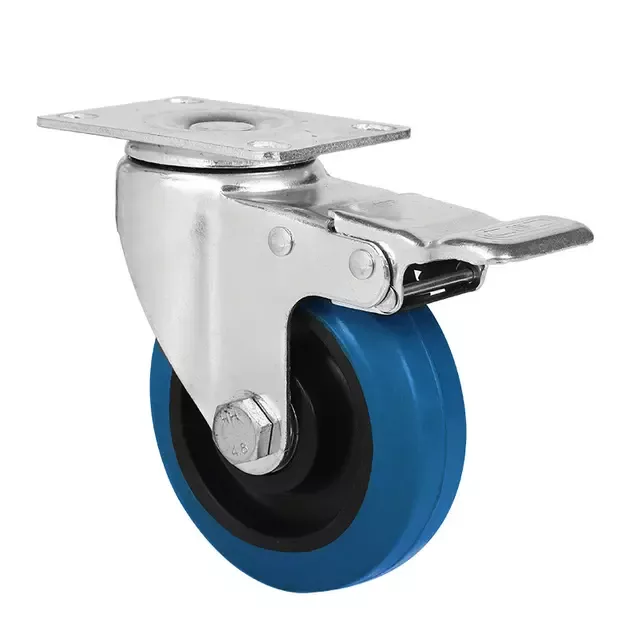
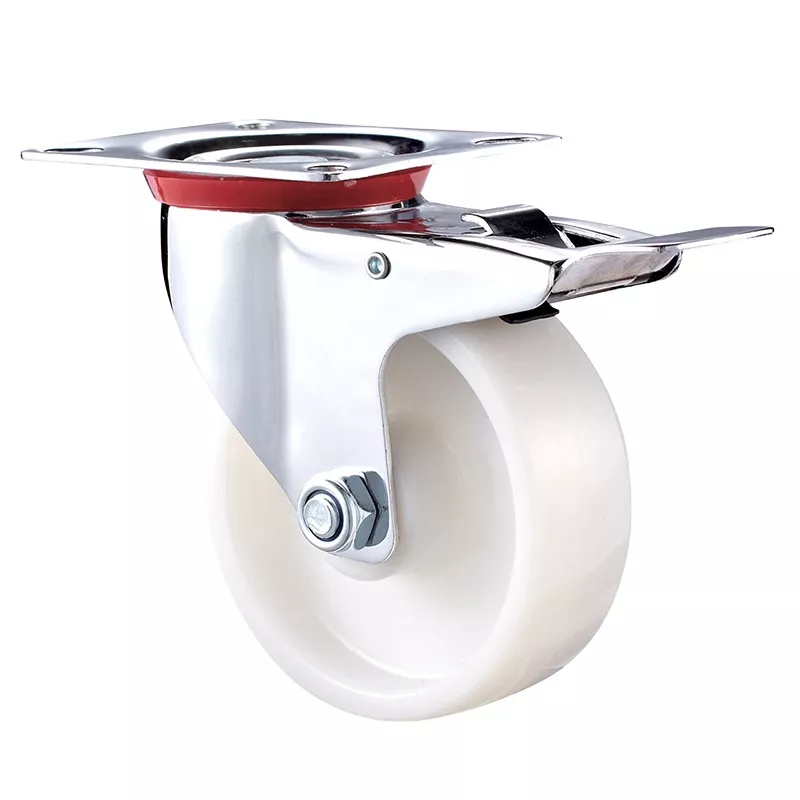
A caster wheel is a simple yet highly effective mechanical component that enables smooth and controlled movement in a wide range of applications. From industrial equipment to logistics systems, the ability of a caster wheel to both roll and rotate allows heavy loads to be moved with minimal effort. Understanding how a caster wheel works requires examining both its structure and the principles behind its motion.
In industrial environments, a caster wheel is constantly exposed to load, friction, and directional changes. Its performance depends not only on the wheel itself but also on how its components interact during movement. By analyzing how rolling, swiveling, and load distribution work together, it becomes easier to understand why a caster wheel is essential for mobility systems.
Key Takeaways
● A caster wheel works by combining rolling motion and swivel rotation
● The swivel mechanism enables 360-degree directional movement
● Offset design allows automatic alignment during motion
● Bearings reduce friction and improve movement efficiency
● Different caster wheel types influence movement behavior
What Is a Caster Wheel?
Basic Definition of a Caster Wheel
A caster wheel is a wheel mounted within a frame that allows both rolling and swiveling movement. Unlike a standard wheel that moves only in one direction, a caster wheel can change direction freely, making it suitable for applications requiring flexibility and control.
This combination of rolling and rotation enables smooth movement in dynamic environments. Because of this design, a caster wheel is widely used in industrial, commercial, and transport systems where mobility is essential.
Difference Between a Wheel and a Caster Wheel
A standard wheel rotates along a fixed axis and requires the entire structure to turn for directional changes. In contrast, a caster wheel includes a swivel mechanism that allows independent rotation, enabling multidirectional movement.
This added flexibility reduces the effort needed to move equipment and improves control in confined spaces. The ability to combine rolling with rotation defines how a caster wheel functions differently from a traditional wheel.
Main Components of a Caster Wheel
Wheel Component
The wheel is responsible for rolling motion and supports the load applied to the caster wheel during operation. It rotates around an axle and is typically made from materials such as rubber, polyurethane, nylon, or cast iron, depending on the application requirements and working environment. Each material offers different characteristics in terms of load capacity, floor protection, and resistance to environmental factors.
Material selection plays a critical role in determining durability, noise level, and wear resistance. For example, rubber wheels provide quieter movement and better shock absorption, while polyurethane wheels offer a balance between strength and floor protection. Nylon wheels, on the other hand, are often used in industrial settings where high load capacity and chemical resistance are required.
A properly designed wheel ensures smooth rolling, reduces resistance, and maintains stability under load. The interaction between wheel material and surface condition directly affects performance, making the wheel component one of the most important parts of a caster wheel system.
Swivel Head Mechanism
The swivel head is the component that allows the caster wheel to rotate 360 degrees, enabling smooth directional changes without lifting or repositioning the equipment. This mechanism is essential for achieving flexibility and maneuverability, especially in environments where movement paths are constantly changing.
Inside the swivel head, a bearing system is typically integrated to reduce friction and allow continuous rotation under load. These bearings may be ball bearings or roller bearings, depending on the design and load requirements. The quality of the swivel mechanism directly influences how easily the caster wheel can change direction.
Without the swivel head, the caster wheel would behave like a fixed wheel, limiting movement to a straight line. Therefore, the swivel mechanism is a defining feature that enables the caster wheel to function effectively in dynamic and confined spaces.
Mounting Plate or Stem
The mounting structure connects the caster wheel to the equipment and serves as the interface between the moving system and the load-bearing structure. It is commonly designed as either a mounting plate or a stem, depending on how the caster wheel is installed and the type of equipment being used.
A properly designed mounting system ensures that the caster wheel remains securely attached and aligned during operation. It plays a key role in distributing forces evenly and preventing stress concentration, which could otherwise lead to instability or structural damage. The mounting method also affects installation efficiency and compatibility with different equipment designs.
A stable and secure mounting structure improves overall system performance by maintaining alignment and minimizing unwanted movement. It is essential for ensuring that the caster wheel operates reliably under varying load conditions.
Bearings and Axle
Bearings and the axle are essential components that enable smooth rotation within the caster wheel system. The axle acts as the central shaft that supports the wheel, while the bearings reduce friction between moving parts, allowing both rolling and swiveling actions to occur efficiently.
Different types of bearings, such as plain bearings, ball bearings, or precision bearings, are used depending on the performance requirements. High-quality bearings improve movement efficiency, reduce noise, and extend the lifespan of the caster wheel by minimizing wear and heat generation.
Without proper bearings, the caster wheel would experience increased resistance and reduced performance, especially under heavy loads. These components ensure consistent and reliable operation, making them critical to the overall functionality of a caster wheel.
Component | Function |
Wheel | Supports load and enables rolling |
Swivel Head | Allows 360° rotation |
Mounting Plate | Connects caster wheel to equipment |
Bearings | Reduce friction and improve motion |
How Does a Caster Wheel Work?
Rolling Motion of the Wheel
The rolling motion occurs when the caster wheel rotates around its axle as force is applied. This allows forward and backward movement with minimal resistance. Efficient rolling depends on wheel material and surface conditions.
As the caster wheel moves, it distributes load across its contact surface, reducing pressure and improving stability. This rolling action forms the foundation of caster wheel functionality.
Swivel Rotation Mechanism
The swivel mechanism allows the caster wheel to rotate horizontally, enabling changes in direction. This rotation is independent of the rolling motion, allowing flexible movement.
The bearing system within the swivel head ensures smooth rotation even under load. This feature allows the caster wheel to adapt to different movement directions easily.
Offset and Self-Alignment Principle
A key feature of how a caster wheel works is its offset design, where the wheel is positioned slightly behind the swivel axis. This creates a trailing effect that causes the caster wheel to align automatically with the direction of movement.
As motion begins, the caster wheel rotates into alignment without manual adjustment. This improves efficiency and reduces effort during operation.
Friction Reduction Through Bearings
Bearings reduce friction within the caster wheel system, allowing both rolling and swiveling actions to occur smoothly. Lower friction improves efficiency and extends component life.
Without bearings, movement would require more force and cause faster wear. Their role is essential for maintaining consistent performance.
![86f18bd8-8585-4f60-9a55-2219198e61c0-640-640]()
Fixed vs Swivel Caster Wheels
Fixed Caster Wheel
A fixed caster wheel moves only in a straight line and does not rotate. It provides stability and directional control but requires additional effort to change direction.
This type is commonly used where straight-line movement is needed and works best when combined with swivel caster wheels.
Swivel Caster Wheel
A swivel caster wheel rotates freely in all directions, allowing flexible movement. It is ideal for applications that require maneuverability in confined spaces.
Its ability to change direction easily reduces effort and improves efficiency during operation.
Combined Systems
Most systems use both fixed and swivel caster wheels to balance stability and maneuverability. Fixed caster wheels maintain direction, while swivel caster wheels allow flexible movement.
This combination provides better control and overall performance in practical applications.
How Caster Wheels Work in Industrial Applications
Warehouse Equipment
In warehouse environments, a caster wheel enables efficient movement of heavy loads across large areas. The combination of rolling and swiveling reduces effort and improves workflow efficiency.
Durability and smooth operation are essential in these settings, where equipment is used continuously. Proper caster wheel performance supports productivity.
Manufacturing Systems
In manufacturing environments, caster wheels allow machinery and equipment to be repositioned easily. This flexibility improves workflow and supports operational efficiency.
Caster wheel systems must handle heavy loads and harsh conditions, requiring consistent performance and durability.
Medical Equipment
Caster wheels are used in medical equipment to provide smooth and controlled movement. Precision and stability are important in these applications.
They ensure reliable mobility while maintaining quiet and efficient operation in sensitive environments.
Common Issues in Caster Wheel Movement
Caster Flutter
Caster flutter occurs when a caster wheel vibrates during movement, often due to speed, load imbalance, or wear. This affects stability and control.
Proper design and maintenance can reduce this issue and improve performance.
Resistance and Drag
Resistance occurs when friction or debris affects the movement of a caster wheel. This increases effort and reduces efficiency.
Regular maintenance and proper material selection help minimize drag.
Uneven Movement
Uneven movement results from poor load distribution or irregular surfaces. This can lead to instability and reduced performance.
Ensuring proper alignment and balanced load improves movement consistency.
![3b3cfe1f-7464-4bee-90b1-6bc61491dbaa]()
Conclusion
Understanding how a caster wheel works provides insight into its role in mobility systems. By combining rolling motion, swivel rotation, and self-alignment, a caster wheel enables efficient and flexible movement across various applications. Each component contributes to stability and durability, ensuring reliable performance under different conditions.
For industrial environments requiring dependable performance and long-term reliability, KOSTER offers caster wheel solutions designed to meet demanding operational needs.
FAQs
How does a swivel caster wheel work?
A swivel caster wheel rotates 360 degrees using a swivel mechanism, allowing multidirectional movement.
Why do caster wheels align automatically?
This is due to the offset design, which causes the caster wheel to follow the direction of motion.
What is caster wheel offset?
It is the distance between the swivel axis and the wheel center, enabling self-alignment.
Why do caster wheels wobble?
Wobbling can be caused by uneven load, worn components, or high-speed movement.
How do bearings affect caster wheel performance?
Bearings reduce friction and ensure smooth rotation, improving efficiency and durability.