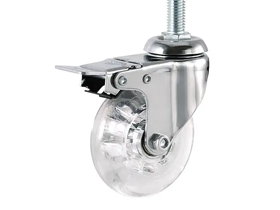
Caster wheels are essential components that provide mobility and make objects easier to move. Found on furniture, equipment, carts, and machinery, these wheels allow for easy repositioning and transport, improving efficiency in various environments, from offices to factories.
Choosing the right caster wheel is crucial for optimal performance and longevity. The type of wheel needed depends on factors like the application, environment, and specific needs of the object. For instance, industrial settings require heavy-duty casters, while medical environments demand non-marking and quiet wheels. Key considerations include load capacity, surface type, and desired mobility.
This article provides a comprehensive overview of different types of caster wheels, their features, and the best applications, helping you choose the right wheel for your needs.
Types of Caster Wheels
1.Rigid Caster Wheels
Description: Rigid caster wheels are fixed and do not rotate, offering straight-line movement only. This type of caster wheel is designed for stable and predictable movement along a linear path.
Best Uses: These are ideal for applications that require stability and straight-line motion, where turning or directional changes are not needed.
Examples: Rigid caster wheels are commonly used in shelving units, industrial equipment, and carts that are meant to stay in a single direction and do not require turning or maneuvering. These wheels are often found in environments that do not demand frequent directional changes.
2.Swivel Caster Wheels
Description: Swivel caster wheels feature a 360° rotation, providing enhanced flexibility and maneuverability. This allows for easy turning and positioning in tight spaces.
Best Uses: Swivel casters are perfect for environments where frequent direction changes are needed, or in tight spaces where high maneuverability is required.
Examples: You’ll find swivel casters on shopping carts, office chairs, and hospital beds. These casters are ideal for applications where objects need to be easily moved around corners, through narrow aisles, or within confined areas, providing maximum flexibility.
3.Locking Caster Wheels
Description: Locking caster wheels come equipped with a locking mechanism that prevents the wheel from rotating or moving when engaged. This provides an additional layer of safety and stability when the item needs to stay in place.
Best Uses: Locking casters are essential when there is a need for the object to remain stationary, especially in environments where safety and stability are important.
Examples: These are commonly used in hospital beds, work carts, and industrial equipment. The locking feature ensures that the object does not move unintentionally, even when the surrounding environment may have vibrations or movement.
4.Heavy-Duty Caster Wheels
Description: Heavy-duty caster wheels are built with high-strength materials that allow them to support heavy loads and withstand extreme conditions. These wheels are designed for industrial-grade applications where durability and load-bearing capacity are critical.
Best Uses: Heavy-duty casters are ideal for high-load environments that require significant weight support and where durability is essential.
Examples: These casters are often used in large industrial machinery, construction equipment, and storage units. Their robust design makes them suitable for environments where objects need to be moved regularly and can bear considerable weight without compromising the wheel’s performance.
5.Pneumatic Caster Wheels
Description: Pneumatic caster wheels are equipped with air-filled tires that offer superior shock absorption, providing a smoother ride over rough or uneven surfaces. The cushioning effect of the tires helps reduce vibration and provides a more comfortable transport experience.
Best Uses: Pneumatic wheels are ideal for outdoor environments or applications where objects need to be moved over uneven terrain or surfaces that would otherwise be harsh on standard wheels.
Examples: Lawn equipment, heavy-duty carts, and outdoor machinery often rely on pneumatic caster wheels. These casters make it easier to maneuver over rough ground, gravel, or uneven paths, offering both durability and comfort during movement.
6.Non-Marking Caster Wheels
Description: Non-marking caster wheels are made from special materials that prevent leaving marks or scratches on floors. These wheels are designed to offer both performance and protection to delicate or high-maintenance flooring.
Best Uses: Non-marking wheels are particularly useful in environments where aesthetic preservation and floor protection are important. They are ideal for spaces where frequent movement is needed without damaging the floor beneath.
Examples: These wheels are often found on medical equipment, office furniture, and retail display units. Their ability to preserve floor surfaces makes them a popular choice in environments with expensive or delicate flooring materials, such as wood, vinyl, or polished tiles.
By understanding the different types of caster wheels and their functions, businesses can choose the most suitable option for their specific needs. Whether you need stability, flexibility, durability, or protection for floors, selecting the right caster wheel can improve performance and extend the life of both your equipment and the floors it moves on.

How to Choose the Right Caster Wheel
Choosing the right caster wheel is essential for ensuring smooth movement, longevity, and efficiency in various applications. Here are the key factors to consider when selecting the most suitable caster wheel for your needs:
1.Load Capacity
The load capacity of the caster wheel is crucial in ensuring that it can support the weight of the object it is intended to move. Overloading the wheel can lead to premature wear, loss of maneuverability, and even failure. To select the right wheel, calculate the weight of the object and choose a caster wheel that exceeds this weight. For heavier equipment, heavy-duty casters with higher weight-bearing capacities are essential.
2.Floor Type
Different wheels are designed to work with specific floor types. Soft wheels are better suited for hard floors like concrete or tile, as they help protect the surface from scratches. Hard wheels, on the other hand, are ideal for carpeted or soft flooring where softer wheels might sink or get stuck. When choosing, consider the floor surface and the environment where the casters will be used to ensure maximum efficiency and avoid damage to both the wheel and the floor.
3.Mobility and Maneuverability Needs
Depending on the task at hand, consider the mobility and maneuverability required for your equipment.
Swivel casters provide 360-degree rotation, offering the highest level of flexibility, especially useful in confined spaces or when frequent direction changes are needed.
Rigid casters are fixed and allow for only straight-line movement, ideal for applications that require stability and predictable direction.
Locking casters are crucial in situations where the object needs to stay in place to prevent movement, offering extra security in medical, industrial, or office environments.
By taking these factors into account—load capacity, floor type, and mobility needs—you can choose the right caster wheels that will ensure smooth and efficient movement, increase durability, and protect the surfaces you work with.
Common Applications of Caster Wheels
1.Industrial Applications
In industrial settings, heavy-duty caster wheels are essential for moving large machinery, equipment, and tools. These casters are designed to handle substantial weight and provide stability while allowing easy maneuvering of industrial assets. Locking casters are often used in factories or warehouses to ensure that equipment remains stationary when needed, providing both mobility and security. These casters are commonly found on conveyor systems, heavy equipment, and storage units.
2.Medical and Healthcare
In the medical and healthcare sectors, swivel casters are used on hospital beds, wheelchairs, and medical carts to provide flexibility and ease of movement in tight spaces. These casters ensure that hospital staff can easily adjust the position of equipment and patients with minimal effort. Locking casters are also crucial for hospital beds and other medical equipment, ensuring stability and preventing unintentional movement during patient care or procedures. The ability to move and lock medical equipment securely improves both convenience and safety.
3.Commercial and Retail
Non-marking casters are commonly used in commercial and retail environments where floor protection is a priority. These casters prevent scratches or damage to floors while providing smooth and easy movement of display units, furniture, and carts. Swivel casters are also popular in this sector, enabling easy navigation around aisles and spaces for items such as shelving units, clothing racks, and shopping carts. The ability to move products quickly and efficiently can significantly enhance the customer experience.
4.Home and Office
For home and office applications, light-duty casters are ideal for furniture, carts, and appliances. These casters are designed for easy mobility in lighter, less demanding environments. Swivel casters are commonly used on office chairs, providing flexibility to move in any direction without needing to reposition the chair. Similarly, rigid casters are useful for small carts, file cabinets, and light-duty furniture. These casters ensure convenient movement in home or office spaces while offering practical mobility for everyday tasks.
FAQ Section
1.What is the best type of caster wheel for heavy machinery?
For heavy machinery, heavy-duty caster wheels are ideal. Choose wheels based on load capacity to support the equipment's weight. Opt for durable materials like steel or polyurethane. Locking casters may also be needed to keep the equipment stationary.
2.Can I use caster wheels on uneven surfaces or rough terrain?
Yes, pneumatic caster wheels with air-filled tires are designed for uneven surfaces. They offer shock absorption and provide a smoother ride over rough or bumpy ground, making them perfect for outdoor equipment or heavy-duty carts.
3.How do I choose the right caster wheel for my office furniture?
For office furniture, swivel casters offer flexibility and easy movement. Choose the right wheel type depending on your floor: for carpeted floors, go for wheels designed to move smoothly over soft surfaces, and for hard floors, choose softer wheels that prevent damage.
4.What’s the difference between locking and non-locking caster wheels?
Locking caster wheels prevent movement and are ideal for stationary applications like hospital beds. Non-locking casters allow free movement, making them suitable for applications requiring flexibility, such as office chairs or shopping carts.
Conclusion
Selecting the right caster wheel for your needs is crucial for ensuring smooth mobility, safety, and efficiency across various applications. Whether you're working with heavy machinery, office furniture, or outdoor equipment, understanding the key differences between caster types—such as heavy-duty, pneumatic, swivel, and locking casters—will help you make the best choice. By considering factors like load capacity, floor type, and mobility needs, you can enhance both the performance and longevity of your equipment. Proper caster selection not only improves ease of movement but also ensures a safer and more productive environment.