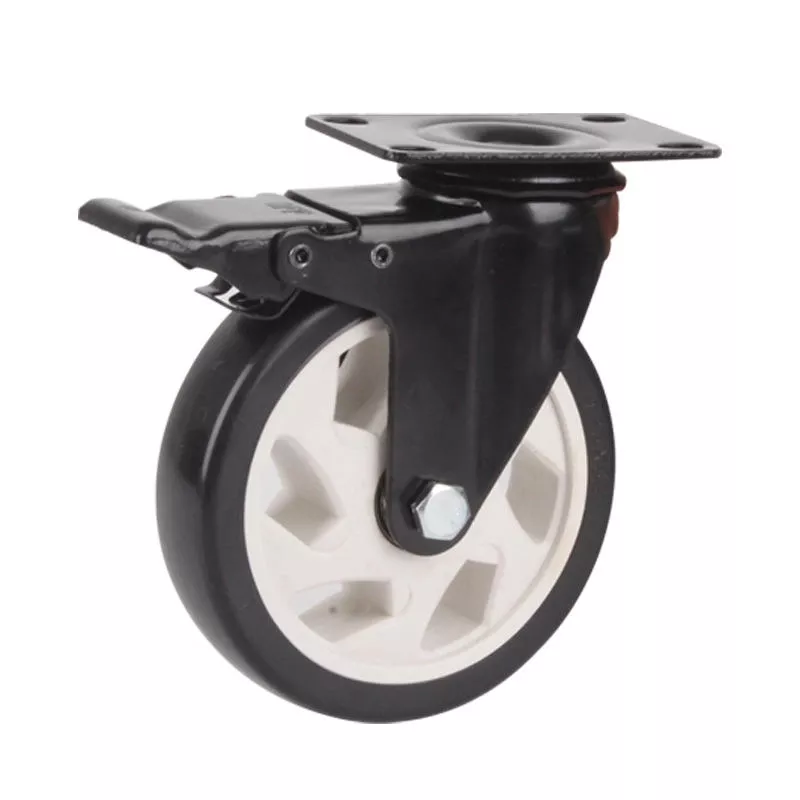
Selecting the wrong mobility components seems harmless initially. However, specifying the wrong caster wheel material is rarely an immediate failure. Instead, it manifests as delayed operational costs. You might notice ruined epoxy floors, ergonomic injuries from high rolling resistance, or premature failure due to chemical degradation. A successful procurement decision requires matching wheel composition to load realities, environmental hazards, and facility constraints. You should never default to the highest weight capacity available just to feel safe.
This guide breaks down the structural realities of caster wheel materials. We provide a clear framework to evaluate Total Cost of Ownership (TCO) and operational suitability. You will learn how to balance load limits against floor protection, acoustic controls, and severe environmental hazards to make a confident engineering decision.
Key Takeaways
Match Hardness to Floor Type: Floor protection and rolling resistance are inversely related. Harder materials (steel, nylon) reduce push-pull effort but risk damaging soft flooring, while softer materials (rubber, polyurethane) protect floors but increase initial rolling resistance.
Calculate with Safety Margins: Never spec a wheel precisely to its maximum static load limit. Dynamic loads, uneven floors, and sudden impacts require a built-in safety margin to prevent structural failure.
Beware of Environmental Blind Spots: High-capacity materials like standard phenolic resin will absorb water and swell if the outer shell is chipped, making them a liability in wash-down or wet environments.
Factor in "Flat-Spotting": Soft elastomers under heavy, stationary loads will permanently deform over time, leading to compromised mobility and vibration issues when finally moved.
Core Caster Wheel Materials: Trade-Offs and Capabilities
Every facility demands specific performance metrics. Choosing the core material for a Caster Wheel dictates how well it handles heavy stress, harsh chemicals, and daily wear. We analyze the primary material categories below based on direct evidence and engineering limits.
Polyurethane (PU) & Thermoplastic Rubber (TPR)
Polyurethane acts as the baseline for versatility in industrial environments. It provides the ideal bridge between the load capacity of rigid plastics and the floor protection of soft rubber.
Implementation Reality: PU materials are non-marking and highly resistant to oils. They excel in commercial spaces and light manufacturing. However, prolonged stationary heavy loads can induce flat-spotting. When you need greater durability, aluminum-core PU wheels offer a much higher strength-to-weight ratio compared to traditional cast-iron cores.
Industrial Plastics (Nylon & Polyolefin)
Nylon and polyolefin deliver exceptional high-impact performance. They feature extremely low rolling resistance, saving operator energy. They also boast high resistance to harsh chemicals, solvents, and cleaning agents.
Implementation Reality: High-impact nylon boasts up to 11,000 PSI tensile strength. Manufacturers frequently use it to replace metal wheels and protect concrete floors. While highly durable, nylon wheels generate significant acoustic noise during transit across hard surfaces. You should avoid them in noise-sensitive zones.
Metals (Forged Steel & Cast Iron)
Engineers specify forged steel and cast iron for extreme stress. These materials handle the highest load capacities available. A single heavy-duty wheel can support up to 30,000 lbs. They also tolerate extreme temperature ranges from -40°F to 800°F.
Implementation Reality: Metal wheels provide zero shock absorption. They will rapidly degrade untreated floors. They are highly destructive if used improperly outside of heavy manufacturing, foundries, or aerospace environments. Always pair them with reinforced flooring.
Phenolic Resin
Phenolic resin represents cost-effective heavy-duty performance. Manufacturers mix macerated canvas with phenolic resin to create a dense core. This combination offers load capacities nearing steel, but without the floor-gouging risks.
Implementation Reality: You must restrict phenolic wheels strictly to dry environments. If an impact compromises the hard outer shell, the interior acts like a sponge in wet conditions. The wheel will absorb moisture, swell, and experience catastrophic structural failure.
Rubber (Solid, Pneumatic, and Neoprene)
Rubber provides maximum acoustic control and shock absorption. These traits make it ideal for fragile loads, hospital carts, and uneven outdoor terrain.
Implementation Reality: Rubber compounds inherently carry the lowest load limits. Standard rubber deteriorates quickly around industrial chemicals and solvents. Specialized alternatives like Neoprene offer superior debris-rejection and oil resistance, though they demand a higher procurement cost.

The 5-Dimension Evaluation Framework for Procurement
Translating your facility requirements into accurate material specifications requires a structured approach. Use the following five dimensions to evaluate your options systematically.
Static vs. Dynamic Load Capacity
Divide the total equipment weight plus the maximum payload by three to calculate your required per-wheel capacity. This assumes a standard 4-wheel cart. During transit, one wheel frequently lifts over uneven ground. Calculating for three wheels ensures your cart never exceeds safe load limits.
Floor Protection & Shore Hardness
Map the material hardness using Shore A or Shore D scales against your existing flooring types. Concrete, linoleum, tile, and steel grating all require different hardness levels to prevent permanent gouging.
Rolling Resistance & Ergonomics
Evaluate the push-pull friction involved in daily operations. Specifying excessively soft wheels for heavy manual carts dramatically increases rolling resistance. This oversight elevates the risk of workplace musculoskeletal injuries among your staff.
Environmental Resistance (Thermal & Chemical)
Assess daily exposure to environmental hazards. Consider animal fats in food processing, continuous water exposure in wash-down zones, metal shavings in machine shops, or extreme heat in industrial bakeries. Each hazard instantly disqualifies certain materials.
Acoustic and Shock Constraints
Determine acceptable decibel levels for your facility. Medical, hospitality, and commercial environments strictly require noise-dampening materials. You must prioritize polyurethane, TPR, or rubber over loud plastics and metals.
Shore Hardness and Flooring Compatibility Table
Wheel Material | Average Hardness Scale | Ideal Flooring Types | Floor Damage Risk |
Soft Rubber | 60 - 75 Shore A | Tile, Linoleum, Hardwood | Very Low |
Polyurethane (PU) | 85 - 95 Shore A | Smooth Concrete, Epoxy | Low |
High-Impact Nylon | 75 - 85 Shore D | Rough Concrete, Steel Grating | Moderate |
Forged Steel | Brinell 145+ | Reinforced Concrete, Track | Very High |
Scenario-Driven Material Selection for Industrial Caster Wheels
Procuring Industrial Caster Wheels requires mapping materials directly to specific industry use cases. Generic choices often lead to operational bottlenecks. Here is how material strengths align with sector-specific challenges.
Heavy Manufacturing & Fabrication Facilities
Challenges: Floors littered with sharp metal debris, areas featuring high radiant heat, and massive structural load requirements.
Ideal Specs: Forged steel wheels or V-groove cast iron wheels for track-guided operations. Alternatively, use heavy-duty polyurethane molded securely onto iron cores for slight shock absorption.
Food Processing & Pharmaceutical (Clean Environments)
Challenges: Daily high-pressure chemical wash-downs, strict hygiene standards, and zero tolerance for rust or bacterial growth.
Ideal Specs: Solid white nylon, polyolefin, or stainless-steel rigs paired with mold-on polyurethane. You must strictly avoid phenolic resin and standard cast iron in these moisture-heavy zones.
Aerospace & Automotive Assembly
Challenges: Moving massive yet delicate payloads across assembly floors. Operations require smooth transit, low rolling resistance, and minimal vibration transfer.
Ideal Specs: High-durometer polyurethane chemically bonded to aluminum cores. Solid elastomer wheels also perform exceptionally well here, balancing heavy loads and floor protection.
Outdoor & Uneven Terrain Logistics
Challenges: Navigating gravel, cracked asphalt, continuous UV degradation, and trapped moisture.
Ideal Specs: Pneumatic or semi-pneumatic wheels handle uneven terrain best. Specify Neoprene materials for reliable oil and debris resistance.
Hidden TCO Drivers and Implementation Risks
Post-purchase realities heavily influence long-term ROI. Material selection involves far more than checking a weight capacity box. You must anticipate how wheels behave over years of physical abuse.
The "Flat-Spotting" Phenomenon
Many facilities park heavy equipment for long periods. Using soft-tread wheels on carts that remain loaded and stationary for over 90% of their lifecycle leads to permanent tread deformation. This creates a flat spot on the bottom of the wheel. When operators finally move the cart, it clatters, vibrates, and requires intense physical effort. Factor in the cost of premature wheel replacement if you specify excessively soft elastomers for stationary loads.
Delamination and Tread Separation
High-torque environments, especially motorized towline applications, generate intense heat and lateral stress. Cheaply bonded polyurethane can easily shear off its metal or plastic core under these conditions. You must evaluate the manufacturer's bonding process. Look for explicit mechanical or chemical mold-on bonding guarantees to prevent catastrophic tread separation during a shift.
ESG Compliance & Corporate Procurement
Enterprise buyers bound by ISO 14001 or strict sustainability mandates face new challenges. Modern compliance requires transitioning away from toxic plastics containing BPA and phthalates. Corporate procurement teams now look toward recycled metals, high-density polyethylene (HDPE), or sustainable natural rubbers. Upgrading to these eco-friendly materials easily satisfies vendor compliance requirements without sacrificing load performance.
Beyond the Wheel: Essential Component Specifications
The material of the wheel becomes irrelevant if the surrounding housing fails. Structural integrity relies equally on the metal rig holding the assembly together. You must scrutinize the bracket and bearing configurations.
Bracket Thickness & Stamping Standards Quick Reference Chart
Application Category | Weight Class | Required Steel Plating Thickness |
Light-Duty | Under 500 lbs | 1.5mm – 3.0mm steel plating |
Heavy-Duty | Up to 2,000 lbs | 3.0mm – 6.0mm steel plating |
Super Heavy-Duty | Up to 20,000 lbs | 6.0mm – 10.0mm forged steel rigs |
Bearing Selection
Bearings dictate your ease of mobility. Precision ball bearings excel at creating low-friction movement for manual pushing. Conversely, tapered roller bearings handle extreme load capacities and high-speed towline applications. Matching the bearing type to your propulsion method ensures longevity.
Surface Treatment / Corrosion Resistance
Assess the rig's finish before approving a purchase. Standard zinc plating works perfectly well for indoor and dry environments. However, if your facility involves corrosive chemicals or wet wash-downs, you must upgrade to heavy powder coating or utilize 304/316 stainless steel rigs.
Conclusion
Shortlisting Logic: Start with your floor type to eliminate destructive materials. Next, calculate your maximum dynamic load and apply a 25-30% safety margin. Finally, filter the remaining options against your specific environmental hazards (chemicals, water, heat).
Next Steps: Document your required load, flooring conditions, and operating environment temperatures.
Consultation: Bring these documented metrics to a structural caster engineer. Request sample evaluations or CAD models tailored for your specific application before committing to a bulk procurement order.
FAQ
Q: Can high-impact nylon completely replace metal caster wheels?
A: Yes, for many applications. High-capacity nylon can bear loads previously reserved for metal (up to thousands of pounds) while significantly reducing floor damage and overall equipment weight. However, nylon will generate more noise.
Q: Why do phenolic wheels fail in wet environments?
A: Phenolic wheels are made from resin-impregnated canvas. If the hard outer layer is scratched or chipped, the exposed inner fibers absorb moisture, causing the wheel to swell, warp, and ultimately disintegrate.
Q: What causes polyurethane treads to peel off the wheel core?
A: This is known as delamination, typically caused by excess heat buildup from high speeds, continuous overloading, or exposure to unapproved chemicals that degrade the adhesive bond between the PU and the iron/aluminum core.
Q: What is the best caster wheel material for extreme heat?
A: Standard plastics and rubbers melt at high temperatures. For environments like industrial bakeries or autoclaves (up to 800°F), forged steel, cast iron, or specially formulated high-temp phenolic wheels are required.