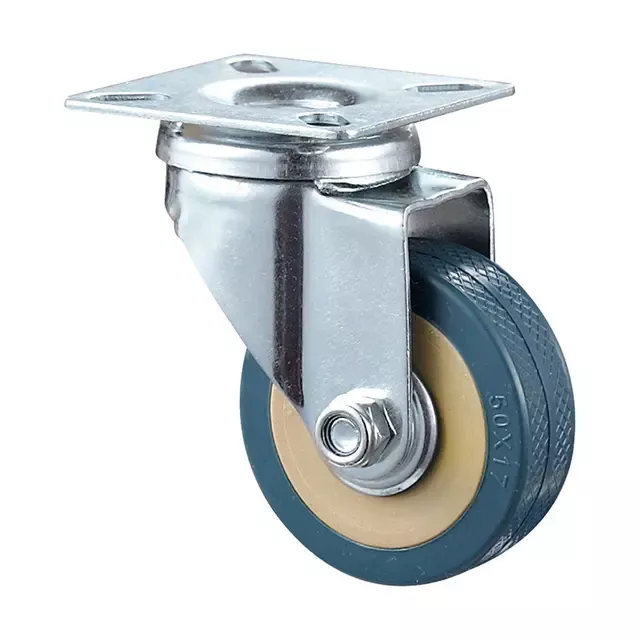
Failing casters bring warehouse and facility operations to a grinding halt. You face unexpected equipment downtime, potential safety hazards, and expensive floor damage. Resolving these operational bottlenecks quickly is critical for smooth daily workflows. Deciding whether to repair or replace a faulty unit requires accurate diagnosis. You need to identify the exact point of failure immediately. Is it the wheel tread material? Has the swivel bearing seized? Or did the mounting mechanism simply fail?
We will provide a clear, evidence-based roadmap to evaluate your hardware options. You will learn how to determine if a unit is salvageable. We will explain the realistic labor required to fix common problems. Finally, we will show you exactly when upgrading to high-quality replacements offers a significantly lower Total Cost of Ownership. By following this guide, you can eliminate repeat hardware failures and protect your flooring.
Key Takeaways
Identifying the caster fixing type (top plate, stem, bolt hole) is the mandatory first step before attempting repairs.
Many "seized" casters are fully repairable by clearing debris and servicing the swivel joint, rather than replacing the wheel.
Loose stem casters in hollow metal tubes require specific mechanical inserts (expanding or threaded) or permanent fixes (welding/epoxy) depending on load requirements.
For Industrial Caster Wheels, the decision to repair vs. replace must weigh hourly maintenance labor against the upfront cost of failure-resistant polyurethane or rubber upgrades.
Uneven wear is rarely a wheel defect; it usually indicates systemic equipment overload or imbalanced weight distribution.
Diagnosing the Root Cause of Caster Wheel Failure
You must frame the evaluation process correctly before attempting any repairs. We often see maintenance teams treat a mere symptom instead of curing the actual disease. Replacing a damaged Caster Wheel without addressing the root cause guarantees a repeat failure. You must understand why the hardware failed in the first place.
Common Failure Modes and Their Triggers
Hardware failures generally fall into three distinct categories. You can isolate the problem by observing how the equipment behaves under an active load.
Uneven Wear and Flat Spotting: This issue rarely indicates a factory defect. It is almost always caused by systemic overloading. Imbalanced load distribution forces one unit to bear excessive weight. Dragging a locked wheel across rough concrete also causes severe flat spotting.
Swivel Joint Seizing: If the unit will not turn, the housing is rarely cracked. This lock-up typically happens due to hair, string, or debris wrapped tightly in the axle. Degraded or dried lubrication inside the ball bearing raceway is the second most common culprit.
Mounting Failure: You will notice the unit becoming extremely wobbly or falling out entirely. This occurs when the socket, threaded insert, or top-plate bolts loosen. High vibration environments or improper initial specifications usually trigger this structural failure.
The Decision Checkpoint
You must evaluate the physical tread condition before investing labor into a repair. Inspect the rolling surface closely. If the tread is cracked, chunked, or heavily degraded, repair is physically impossible. Move directly to replacing the unit. You cannot restore compromised tread compounds.

Standard Repair SOP for Seized and Wobbly Casters
Many units end up in the trash when they only need basic maintenance. You can restore most seized or misaligned units using this standard operating procedure.
Step 1: Tension Release and Alignment. Start by loosening the axle bolt slightly. This releases built-up pressure on the fork. Use a heavy rubber mallet to gently tap misaligned wheels back into the center of the yoke. Do not strike the metal housing directly with a steel hammer.
Step 2: Debris Clearing. Dirt and debris cause excessive friction. Utilize a high-pressure air compressor and stiff wire brushes. Clear the axle shaft and the upper swivel joints thoroughly. You may need a utility knife to cut away tightly wound shrink-wrap or hair.
Step 3: Advanced Bearing Maintenance. You must address the common misconception about sealed units. Many technicians believe units with crimped metal shields are completely unrepairable. This is a myth. The metal shield can be carefully pried off using a small flathead screwdriver. You can then clean and repack the internal bearings. However, the original metal shield often cannot be perfectly re-seated. You will need to switch to aftermarket rubber seals if the unit operates in heavily soiled environments.
Step 4: Proper Lubrication. Avoid using standard WD-40 for long-term bearing lubrication. Standard penetrating oils evaporate quickly and actually attract new dirt. Apply a dedicated silicone-based spray or heavy lithium grease. Apply this to the axle and swivel mechanisms. Proper grease prevents moisture buildup and stops future rust formation.
How to Fix Loose Casters in Hollow Metal Furniture and Equipment
A highly common failure occurs with tubular furniture and utility carts. Machine-riveted casters frequently fall out of hollow metal legs. This leaves an empty cavity with no pre-installed insert to hold a new replacement stem. You cannot simply shove a new unit into an empty metal tube.
Solution Tiers Based on Load and Portability
You must choose a repair method based on the equipment's weight capacity and how often it moves. We break these solutions down into three practical tiers.
Repair Tier | Method & Materials | Ideal Application | Major Trade-Offs |
Light-Duty (Permanent) | Industrial adhesives (JB Weld, heavy-duty epoxy) to bond the stem directly into the metal cavity. | Lightweight carts, static displays, or home furniture moved infrequently. | Prevents any future replacement. Unsuitable for high-load items or severe impact environments. |
Medium-Duty (Scalable) | Bolt-hole casters paired with expanding polyurethane inserts or ribbed threaded tube inserts. | Office furniture, medical equipment, and medium warehouse racks. | Fast installation process. Maintains modularity. Strict weight limits apply to the plastic inserts. |
Heavy-Duty (Industrial) | Re-threading the axle with a tap and die set. Tack welding stainless steel threaded inserts into the tube. | Heavy manufacturing carts, engine hoists, and severe industrial environments. | Highest load capacity and safety. Requires specialized welding tools and incurs high labor costs. |
Repair vs. Replace
Maintenance teams often repair items that they should throw away. You must calculate the Total Cost of Ownership (TCO) before touching a wrench. Spending 45 minutes of a maintenance technician's time tearing down, cleaning, and re-lubricating a standard $15 unit is a net-negative return on investment.
Labor Costs versus Part Costs
Calculate your hourly maintenance rate. Compare it directly to the upfront cost of new Industrial Caster Wheels. High-quality polyurethane or rubber upgrades may cost more initially. However, they eliminate the recurring labor costs associated with fixing cheap, failing hardware.
When You Should Repair
You are dealing with high-value, specialized units. Examples include shock-absorbing rigs or heavy-duty forged steel assemblies.
The downtime waiting for a replacement part severely impacts production. Mechanical repair makes sense if it gets the line moving today.
The failure is purely cosmetic or involves simple surface rust that wire brushing can solve in five minutes.
When You Should Replace
You experience repeated failures of the exact same unit. This clearly indicates incorrect initial specification for the load.
Floor damage is actively occurring. You must upgrade from hard plastic or cast iron to non-marking polyurethane immediately.
You want to eliminate future maintenance labor. Upgrading to multi-lock systems or sealed precision bearings is a smart long-term investment.
Preventive Maintenance to Minimize Future Downtime
Reactive maintenance destroys facility budgets. You need a proactive strategy to keep rolling equipment operational. Implementing a basic preventive checklist extends hardware lifespan significantly.
Routine Inspection Criteria
Schedule periodic checks for all rolling assets. Inspect bolt torque on top plates every six months. Look for early signs of rust on the yoke. Check the tread surface for peeling, chunking, or severe flat spots. Catching a loose bolt early prevents the entire bracket from ripping out of the equipment frame.
Debris Mitigation
Facility cleanliness directly impacts hardware longevity. Clear small gravel, metal shavings, or hard floor debris daily. These materials easily embed themselves into softer polyurethane or rubber treads. Once embedded, they act like coarse sandpaper, grinding away your expensive epoxy or concrete floors.
Load Compliance
Strictly enforce stated weight limits across your facility. Ensure workers balance the center of gravity on utility carts and storage racks. Putting heavy items on one side of a cart crushes the suspension of a single unit. Proper weight distribution prevents premature uneven wear and keeps the swivel bearings turning smoothly.
Conclusion
Fixing a compromised rolling unit ranges from a quick five-minute cleaning to complex metal fabrication. You must always diagnose the root cause first to prevent repeated breakdowns. Assess whether the failure stems from overload, debris entanglement, or structural mounting flaws.
We encourage you to audit your failing hardware using the diagnostic framework provided above. Clean out the swivel joints and upgrade your lubrication methods. However, if repairs prove unscalable or workplace safety is compromised, do not hesitate. Evaluate high-grade replacement options specifically tailored to your load requirements and flooring materials today.
FAQ
Q: Can you use WD-40 on caster wheels?
A: Yes, but only for initial cleaning and rust penetration. Standard WD-40 evaporates and leaves the metal unprotected. For long-term lubrication, you must apply a dedicated silicone-based lubricant or specialized bearing grease. These thicker compounds reduce friction permanently and repel moisture effectively, preventing future joint lock-ups.
Q: How do I stop my caster wheels from sliding or rolling?
A: Aside from permanently upgrading the equipment to total-lock brake systems, you can implement immediate manual fixes. Utilize specialized caster blocks, heavy rubber wedges, or dense wheel chocks to secure the equipment firmly in place. Ensure the floor surface is dry to maximize the grip of these stopping tools.
Q: What causes industrial casters to damage flooring?
A: Hard wheel materials carrying heavy loads will easily scratch standard concrete or epoxy floors. Cast iron, steel, or cheap nylon are notorious for this. Additionally, sharp debris embedded in the tread acts like sandpaper. Upgrading to softer, non-marking polyurethane wheels is the standard industry fix for floor protection.
Q: How do you fix a caster wheel that won't swivel?
A: A locked swivel joint is almost always caused by string or debris entanglement. Dried, hardened grease in the upper bearing raceway is the second major cause. You should disassemble the joint, clear it with compressed air, and apply fresh lithium grease. This usually restores full motion unless the internal ball bearings are crushed.