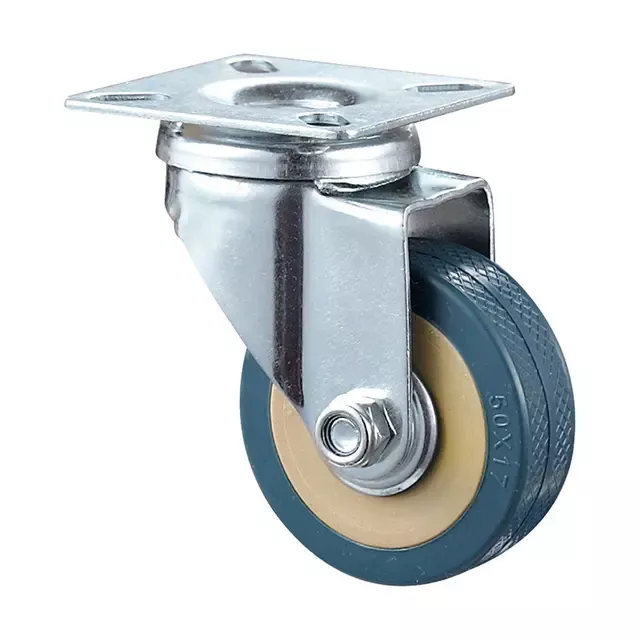
A caster wheel is a mechanical component designed to enable smooth and controlled movement of objects across surfaces. It consists of a wheel mounted within a housing or bracket, allowing it to support loads while providing mobility in various directions. From industrial equipment and warehouse carts to furniture and medical devices, the caster wheel plays a critical role in improving efficiency and flexibility in movement.
Unlike a standard wheel, a caster wheel integrates both rolling and steering functions, making it a more advanced mobility solution. Its design allows objects to be moved with minimal effort, even under heavy loads, which is why it is widely used in both commercial and industrial environments.
Key Takeaways
● A caster wheel is a wheel mounted to a frame that enables objects to move easily.
● It includes components such as a wheel, bracket, and mounting system.
● Swivel and rigid casters are the two primary types.
● Caster wheel designs support both load-bearing and directional movement.
● They are used across furniture, industrial, medical, and logistics applications.
What Is a Caster Wheel?
The Basic Definition
A caster wheel is a wheel assembly that is attached to an object to allow it to move efficiently across a surface. It typically includes a wheel housed within a fork or bracket, which is then mounted to the base of equipment or furniture. This configuration enables both load support and motion, making the caster wheel essential for mobility solutions.
The defining feature of a caster wheel is its ability to combine rotation and support. The wheel itself rotates along its axis, while the entire assembly may rotate independently depending on the design. This dual functionality allows objects to be moved in multiple directions with minimal resistance.
In industrial contexts, a caster wheel is engineered to handle significant loads while maintaining stability and durability. This makes it a fundamental component in systems that require frequent repositioning or transport.
What Defines a Caster?
A caster is not simply a wheel but a complete assembly that includes structural and functional components working together. The presence of a mounting mechanism and a supporting bracket distinguishes a caster from a standalone wheel. This integrated design allows the caster wheel to be attached securely to equipment.
The caster also includes a swivel mechanism in many designs, enabling 360-degree rotation. This feature allows for directional flexibility, which is especially important in environments where maneuverability is required. Without this mechanism, movement would be limited to a fixed path.
The combination of mounting, support, and rotation defines the caster as a mobility system rather than just a rolling element. This distinction is essential in understanding the broader functionality of a caster wheel.
What Is a Wheel?
A wheel is a circular component designed to rotate on an axle and facilitate movement. It is one of the most basic mechanical elements used in transportation and machinery. Unlike a caster wheel, a wheel does not include a mounting bracket or steering capability.
The primary function of a wheel is to reduce friction and enable rolling motion. It supports loads but does not provide directional control beyond the axis on which it is mounted. This limits its application in scenarios where flexibility is required.
Because a wheel lacks the structural components of a caster, it is typically used in fixed systems. In contrast, a caster wheel expands on this concept by integrating additional functionality.
Difference Between a Caster and a Wheel
The distinction between a caster and a wheel lies in their structure and functionality. While both involve rolling motion, a caster wheel incorporates additional elements that enable steering and mounting.
Feature | Wheel | Caster Wheel |
Structure | Single component | Assembly with bracket |
Movement | Linear only | Multi-directional |
Mounting | Axle-based | Plate or stem mounting |
Function | Rolling | Rolling + steering |
A caster wheel provides enhanced mobility by allowing both rotation and directional change. This makes it more suitable for dynamic environments where movement is frequent and varied.
How Does a Caster Wheel Work?
Swivel Mechanism
A caster wheel operates through a swivel mechanism that allows the assembly to rotate around a vertical axis. This enables the wheel to change direction without requiring the entire object to be repositioned. The swivel function is achieved through a bearing system located above the wheel.
This mechanism is essential for maneuverability in tight spaces. It allows equipment to be moved smoothly in any direction, reducing the effort required for repositioning. In applications such as carts or hospital beds, this flexibility is critical.
The swivel design also distributes forces evenly, preventing uneven wear and extending the lifespan of the caster wheel. This contributes to consistent performance over time.
Load Distribution
A caster wheel supports weight by distributing loads through its structure and materials. The wheel absorbs pressure while the bracket transfers the load to the mounting surface. This balanced distribution ensures stability during movement.
Different caster wheel designs are engineered to handle varying load capacities. Heavy-duty versions are constructed with reinforced materials to withstand higher stress levels. This makes them suitable for industrial environments.
Proper load distribution also minimizes deformation and maintains rolling efficiency. This is especially important when transporting heavy equipment across long distances.
Rolling and Steering Integration
The functionality of a caster wheel is based on the integration of rolling and steering. The wheel rotates along its horizontal axis, while the swivel mechanism allows vertical rotation. This dual-axis movement enables seamless navigation.
This integration allows for precise control in movement, even under complex conditions. It reduces friction and enhances efficiency, making the caster wheel a versatile component in mobility systems.
The combination of these functions distinguishes the caster wheel from traditional mobility solutions. It offers a balance between stability and flexibility.
![3db69d29-aa5d-439e-98be-60816c3bff22-640-640]()
Components of a Caster Wheel
Wheel
The wheel is the primary rolling element of a caster wheel. It is responsible for direct contact with the ground and determines the smoothness of movement. Materials such as polyurethane, rubber, and nylon are commonly used.
Each material offers different performance characteristics. Polyurethane provides durability and load capacity, while rubber offers shock absorption and quiet operation. Nylon is known for its strength and resistance to wear.
The selection of wheel material directly affects the performance of the caster wheel in specific environments. This makes it a critical component in design considerations.
Bracket
The bracket, also known as the fork, holds the wheel in place and connects it to the mounting system. It provides structural support and ensures that the wheel remains aligned during operation. The strength of the bracket determines the load capacity of the caster wheel.
Brackets are typically made from steel or other मजबूत metals to ensure durability. They are designed to withstand mechanical stress and maintain stability under load. This makes them essential for heavy-duty applications.
The design of the bracket also influences the overall performance of the caster wheel. A well-constructed bracket enhances both safety and efficiency.
Mounting Plate or Stem
The mounting system attaches the caster wheel to the object it supports. It can be a plate, stem, or threaded design depending on the application. This component ensures secure installation and stability.
Plate-mounted casters are commonly used in industrial settings due to their strength. Stem-mounted casters are often found in furniture and lighter applications. Each type serves a specific purpose.
The mounting method affects both installation and performance. A secure mount is essential for maintaining the integrity of the caster wheel system.
Bearings
Bearings are used within the caster wheel to reduce friction and enable smooth rotation. They are located both in the wheel and in the swivel mechanism. High-quality bearings improve efficiency and longevity.
Different types of bearings, such as ball bearings and roller bearings, are used depending on the application. Each type offers specific advantages in terms of load handling and speed.
The presence of bearings enhances the overall functionality of the caster wheel. It ensures consistent performance under varying conditions.
Types of Caster Wheels
Swivel Casters
Swivel caster wheels are designed to rotate 360 degrees, allowing for maximum maneuverability. They are commonly used in applications where directional flexibility is required. This includes carts, chairs, and mobile equipment.
The swivel function enables smooth navigation around obstacles and tight spaces. It reduces the effort needed to change direction. This makes swivel caster wheels ideal for dynamic environments.
Their design includes a rotating plate and bearing system, which supports continuous movement. This enhances usability in both industrial and commercial settings.
Rigid Casters
Rigid caster wheels, also known as fixed casters, only allow movement in a straight line. They do not have a swivel mechanism, which makes them more stable in linear motion. This design is suitable for applications where direction does not change frequently.
Rigid caster wheels are often used in combination with swivel casters. This combination provides both stability and maneuverability. It is commonly seen in carts and transport systems.
Their simplicity contributes to durability and load-bearing capacity. This makes them reliable in heavy-duty applications.
Light Duty vs Heavy Duty Casters
Caster wheels are categorized based on their load capacity. Light-duty caster wheels are used for furniture and small equipment, while heavy-duty caster wheels are designed for industrial use. This classification helps in selecting the appropriate type for specific applications.
Heavy-duty caster wheels are constructed with reinforced materials and larger dimensions. They are capable of handling substantial loads without compromising performance. This makes them essential in manufacturing and logistics.
Light-duty versions prioritize ease of movement and minimal noise. They are suitable for environments where load requirements are lower.
Material-Based Casters
Different materials are used in caster wheels to achieve specific performance characteristics. The choice of material affects durability, noise level, and resistance to environmental factors.
Material | Key Properties | Typical Use |
Polyurethane | Durable, high load capacity | Industrial |
Rubber | Shock-absorbing, quiet | Indoor furniture |
Nylon | Strong, wear-resistant | Heavy-duty |
TPR | Non-marking, silent | Hospitals |
Material selection plays a significant role in determining the effectiveness of a caster wheel. It influences both performance and longevity.
Common Applications of Caster Wheels
Furniture
Caster wheels are widely used in furniture to enhance mobility and convenience. They are commonly found in chairs, tables, and cabinets. This allows furniture to be repositioned بسهولة without lifting.
The use of caster wheels in furniture improves flexibility in interior spaces. It enables quick rearrangement and efficient use of space. This is particularly useful in offices and homes.
The design of caster wheels for furniture focuses on smooth movement and minimal noise. This ensures comfort and usability.
Industrial Equipment
In industrial settings, caster wheels are essential for moving heavy machinery and equipment. They support large loads while maintaining stability and control. This makes them a critical component in manufacturing environments.
Industrial caster wheels are designed for durability and resistance to harsh conditions. They are often made from high-strength materials to withstand continuous use. This ensures reliability over time.
Their role in improving operational efficiency cannot be overstated. They facilitate movement and reduce manual effort.
Medical Equipment
Caster wheels are used in medical equipment such as hospital beds, carts, and diagnostic devices. They enable smooth and quiet movement, which is essential in healthcare environments. This contributes to patient comfort and safety.
Medical caster wheels are designed with precision and hygiene in mind. They often include features such as locking mechanisms and non-marking materials. This ensures controlled movement and cleanliness.
Their application in healthcare highlights the importance of reliability and performance. They play a vital role in daily operations.
Logistics & Warehousing
In logistics and warehousing, caster wheels are used in carts and transport systems. They enable efficient movement of goods across large areas. This improves productivity and workflow.
Caster wheels in this sector are designed for heavy loads and continuous use. They must withstand varying conditions and surfaces. This requires robust construction and high-quality materials.
Their contribution to supply chain efficiency is significant. They support fast and reliable transport.
How Are Caster Wheels Made?
Metal Bracket Production
The production of caster wheels begins with the fabrication of metal brackets. Steel sheets are cut and shaped to form the structural components. This process ensures strength and durability.
Advanced machinery is used to achieve precision in cutting and forming. This results in consistent quality across products. The bracket forms the backbone of the caster wheel.
Surface treatments may also be applied to enhance corrosion resistance. This extends the lifespan of the component.
Wheel Material Molding
The wheel is manufactured through molding processes using materials such as rubber, polyurethane, or nylon. These materials are heated and shaped into the desired form. This process determines the performance characteristics of the caster wheel.
Different molding techniques are used depending on the material. Each technique ensures optimal strength and consistency. This is essential for maintaining quality.
The choice of material affects the final application of the caster wheel. It determines factors such as load capacity and noise level.
Assembly and Quality Testing
The final stage involves assembling all components into a complete caster wheel. This includes attaching the wheel to the bracket and installing bearings. Each component must fit precisely to ensure functionality.
Quality testing is conducted to verify performance under load. This includes checking rotation, stability, and durability. Only products that meet standards are approved.
This process ensures that the caster wheel performs reliably in real-world conditions. It is a critical step in manufacturing.
Conclusion
A caster wheel is more than a simple rolling component; it is a complete mobility system that integrates structure, movement, and load-bearing capability. Its ability to combine rolling motion with directional control makes it indispensable across industries such as furniture, manufacturing, healthcare, and logistics. By understanding its definition, components, working principles, and types, the role of the caster wheel becomes clear as a foundational element in modern mobility solutions.
For applications that require durability, precision, and reliable performance, working with an experienced manufacturer such as KOSTER ensures access to high-quality caster wheel solutions designed for diverse industrial needs.
![5ecc9e53-5504-4d73-a56c-b0ed09be329a-640-640]()
FAQ
What is a caster wheel used for?
A caster wheel is used to provide mobility to objects, allowing them to be moved easily across surfaces. It is commonly applied in furniture, industrial equipment, medical devices, and transport carts. Its design supports both movement and load-bearing.
What is the difference between a caster and a wheel?
A wheel is a single rotating component, while a caster wheel is a complete assembly that includes a wheel, bracket, and mounting system. A caster also provides directional control through a swivel mechanism.
What are the main types of caster wheels?
The main types of caster wheels are swivel casters and rigid casters. Swivel casters allow 360-degree rotation, while rigid casters move only in a straight line. They are often used together for balanced performance.
What materials are caster wheels made of?
Caster wheels are made from materials such as polyurethane, rubber, nylon, and TPR. Each material offers different properties in terms of durability, noise reduction, and load capacity.
How does a swivel caster work?
A swivel caster works through a rotating mechanism that allows the wheel assembly to turn around a vertical axis. This enables movement in any direction and improves maneuverability.
Are caster wheels suitable for heavy loads?
Yes, heavy-duty caster wheels are specifically designed to support large loads. They are constructed with reinforced materials and robust structures to maintain stability and performance under stress.